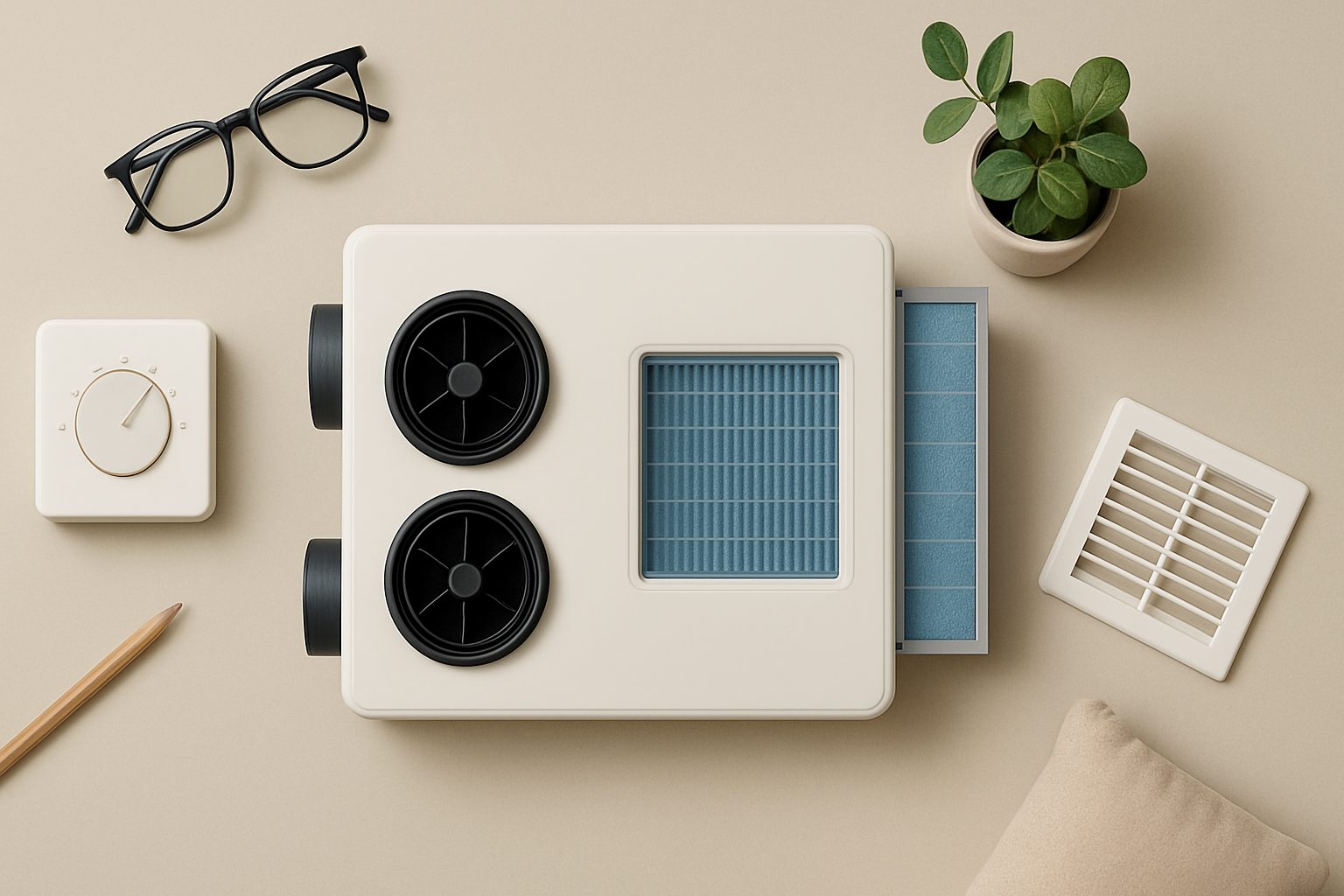
Best Quiet Air Handling Units for UK Bedrooms: Silent Running Picks
Restless sleepers know the problem well: a noisy air handling unit can turn your bedroom into an acoustic nightmare. Whether you're upgrading an existing system or installing mechanical ventilation for the first time, noise levels matter far more than many homeowners realise. A poorly specified AHU can vibrate your wall, rattle ductwork, and leave you lying awake at 3 a.m. listening to fan noise that wouldn't tolerate in any other room of your home.
The good news is that low-noise units exist—and they're increasingly the standard, not the exception. UK building regulations around ventilation mean more homes are installing AHUs, but not all are equal when it comes to keeping things quiet. Knowing what to look for separates a peaceful install from a regrettable one.
Why Bedroom Noise Matters More Than You'd Think
Bedrooms aren't like kitchens or bathrooms. You spend 8+ hours in them, often when the rest of your environment is silent. A unit producing 35–40 decibels might be barely noticeable in a living space but becomes intrusive when you're trying to sleep. Research consistently shows that consistent background noise above 30 dB degrades sleep quality, even if you don't consciously wake.
Noise from an AHU comes from multiple sources: the fan motor itself, air turbulence in the unit body, vibration transmission through walls and ducts, and rattle from unsecured components. A truly quiet bedroom AHU addresses all of these, not just one.
Decibel Ratings: What the Numbers Actually Mean
An AHU's noise output is usually given as a rated SPL (Sound Pressure Level) in decibels, measured at 1 metre under laboratory conditions. These measurements happen at the unit's outlet or in a reverberant chamber—real-world bedroom conditions may differ slightly, but the relative comparison between units still holds.
Here's the practical scale:
- Below 25 dB: Nearly silent; you'll hear it only in absolute quiet.
- 25–30 dB: Very quiet; acceptable for most sleepers.
- 30–35 dB: Quiet enough for light sleepers if the unit is remotely positioned.
- 35–40 dB: Noticeable; may interrupt sensitive sleepers, especially at night.
- 40+ dB: Audible background noise; generally unsuitable for bedrooms.
Most quality UK-sold bedroom AHUs sit in the 25–32 dB range. Check the manufacturer's spec sheet for the actual decibel rating—don't rely on marketing claims like "whisper-quiet" without numbers to back them up.
Key Features That Control Noise
Motor Type and Speed Control
EC motors (electronically commutated) are substantially quieter than traditional AC induction motors. They run more efficiently, generate less vibration, and let you reduce speed to achieve even lower noise when full ventilation isn't needed. This matters in bedrooms: you can set the AHU to a lower speed during sleeping hours.
Vibration Isolation
This is often overlooked but critical. Even a quiet motor can transmit vibration through rigid mounting points into walls and ductwork, creating structure-borne noise that travels far. Look for units with:
- Elastomer or spring-loaded dampers at mounting points
- Internally lined unit bodies (acoustic foam or rockwool)
- Flexible duct connections rather than rigid fittings
Duct Design
The unit itself might be quiet, but poorly designed or undersized ductwork amplifies noise. Look for:
- Larger-diameter ducts (reduces air velocity and turbulence)
- Lined or wrapped ducts to absorb sound
- Gentle bends rather than sharp corners
- Adequate distance between the AHU and the bedroom (at least 2–3 metres reduces perceived noise significantly)
Commissioning and Speed Settings
Many AHUs are installed and left running at full speed unnecessarily. A unit set to 50% speed might reduce noise by 10–15 dB. Modern units with humidity or CO₂ sensors can modulate automatically, meaning the fan only runs hard when necessary.
Positioning and Installation Matter as Much as the Unit
You can choose the quietest AHU on the market and still end up with a noisy bedroom if installation misses the point.
Install the unit in a loft, basement, or utility room—anywhere except the bedroom itself. Placing it metres away, with well-sealed ductwork, makes a far bigger difference than chasing the last decibel from the equipment spec.
Use flexible ducting near the AHU and the bedroom grille. Rigid pipework transmits vibration efficiently; flexible sections act as acoustic barriers. Wrap ducts with acoustic lagging if noise becomes an issue later.
Ensure the unit sits on vibration isolators (proper mounts, not just resting on the floor). A lightweight plastic isolator is often included but may not be sufficient; upgrading to commercial-grade spring or elastomer mounts is worthwhile if noise persists.
Real-World Expectations
A well-specified and installed bedroom AHU—perhaps running on low speed, in a remote location, with vibration damping and lined ducts—may produce barely 25 dB of noise, perceivable only in absolute silence. At moderate speed, expect 30–32 dB: noticeable but not disruptive for most people.
Cheap units, poor installation, or running at full speed will easily hit 40+ dB and cause sleep disruption.
The Takeaway
Bedroom air handling doesn't have to mean noise. The market offers plenty of genuinely quiet options, especially if you're willing to specify EC motors, proper vibration isolation, and sensible ductwork from the outset. Take time to compare decibel ratings between units, and invest in installation that keeps the unit remote, well-mounted, and properly ducted.
Your sleep quality is worth the extra attention to detail.
More options
- Zehnder ComfoAir MVHR Units (Amazon UK)
- Vent-Axia Sentinel Kinetic MVHR (Amazon UK)
- Mitsubishi Lossnay Ventilation Units (Amazon UK)
- Nuaire Drimaster & Positive Input Ventilation (Amazon UK)
- AHU Replacement Filters & Accessories (Amazon UK)