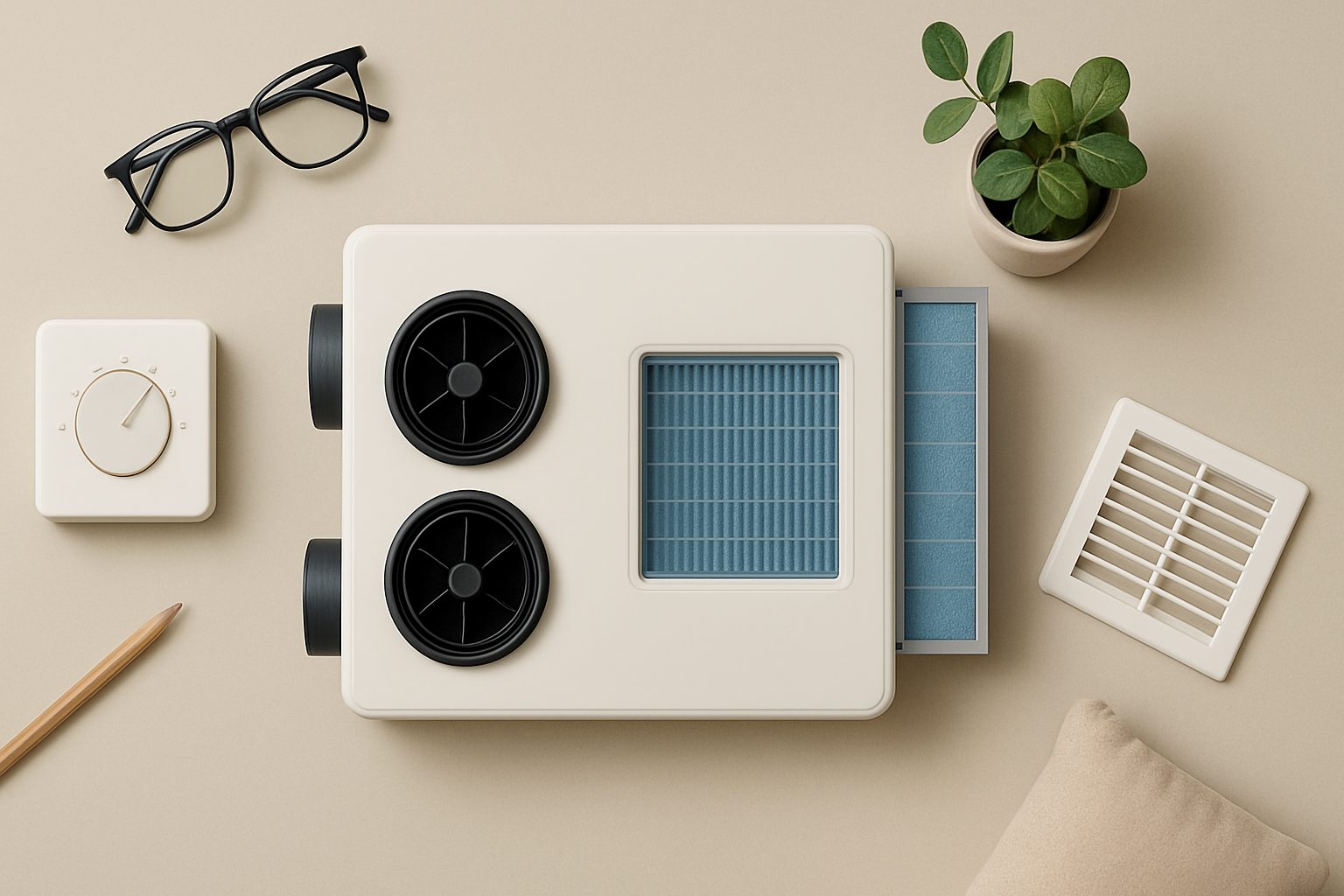
Best Energy-Efficient Air Handling Units for the UK Climate (2025)
Air handling units have moved from niche commercial kit to a serious consideration for UK homes and small commercial spaces. If you're retrofitting heat recovery or upgrading tired ventilation, finding an AHU that actually delivers on efficiency claims—and suits our damp, temperate climate—matters.
Why AHU efficiency matters in the UK
The 2022 energy crisis shifted the conversation. Energy costs stayed elevated, and building regulations tightened further. An inefficient AHU quietly burns money: excessive fan power draw, poor heat recovery, or oversizing can add hundreds to annual running costs.
UK heating and ventilation systems are assessed via SEDBUK (Seasonal Efficiency of Boilers Directorate) ratings for boilers and broader SAP (Standard Assessment Procedure) calculations for whole-building energy performance. AHUs feed into SAP compliance directly—poor heat recovery efficiency drags your SAP rating down, which affects building control approval, mortgage valuations, and EPC scores.
The UK climate isn't harsh, but it's relentlessly damp. Winter temperatures hover around 5–8°C; humidity is consistently high. A well-designed AHU must recover heat efficiently without letting moisture wreck your insulation. Many continental models underperform here.
Key efficiency metrics explained
Heat recovery efficiency (HRE): Percentage of heat recaptured from exhaust air and transferred to incoming fresh air. Look for 80%+ for ducted systems. Below 75% is poor value, especially in retrofit scenarios where you're replacing working ventilation.
Specific Fan Power (SFP): Watts per litre per second of air moved. Lower is better. Modern, well-matched units hit 1.5–2.0 W/(l/s); older or oversized systems often creep above 3.0. This single metric drives fan running cost more than any other.
Pressure drop: Some manufacturers overstate HRE by testing at unrealistic flow rates. Check certified test data at actual operating conditions. UK and EU standards now require this transparency.
Winter condensation risk: Heat exchangers (especially counterflow designs) need frost protection or manual bypass in hard-freeze conditions. The UK rarely hits true hard freeze, but unheated lofts and outbuildings do. Confirm the unit handles your specific installation environment.
Commercial vs. residential AHU differences
The distinction matters. Commercial units are oversized for flexibility and long service life but carry higher fan power and upfront cost. Residential-focused AHUs are smaller, lower power, but sometimes cut corners on reliability or serviceability.
For home retrofit or small commercial spaces (up to 500 m²), domestic-focused models make sense: MVHR units (Mechanical Ventilation with Heat Recovery) or small ducted AHUs designed for kitchen, bathroom, and living-space ventilation. They typically sit in the 0.5–1.0 kW bracket, compared to 5+ kW for true commercial kit.
Genuine commercial AHUs (2+ kW) suit offices, light industrial, or retail where continuous operation and high air quality matter. They'll have better filtration, larger heat exchangers, and easier maintenance—but they're overkill for most homes.
SEDBUK and SAP compliance
New building regulations require SAP calculations that explicitly score ventilation efficiency. A ducted MVHR unit with 80%+ HRE and SFP under 2.0 W/(l/s) will score well. A single-room extractor, by contrast, contributes almost nothing to SAP and may worsen the rating by introducing uncontrolled infiltration.
If you're planning a new-build or major renovation triggering Building Regulations, ignore SEDBUK and focus on SAP. Your heating engineer or energy assessor will need the AHU's certified HRE and fan power figures to model it correctly. Mismatches between claimed and actual performance are a common audit failure.
For retrofit without Building Regulations approval, SEDBUK and SAP are less prescriptive, but the metrics still indicate real operational cost.
Practical installation considerations for UK homes
Ductwork placement: UK homes often have shallow loft spaces with poor headroom. Ductwork must route efficiently without crushing insulation or creating acoustic nightmares. Some units are designed for tight spaces; others assume commercial plenum.
Condensation and moisture: UK bathrooms and kitchens produce steady moisture, especially in winter. An MVHR unit without proper drainage or bypass can frost up or accumulate condensation in ducts. Ensure the installer specifies drain provision and, if needed, electric heater boost for zero-degree conditions.
Noise: Fan noise travels easily in domestic ducts. Look for attenuators or low-speed options. A 2.5 kW commercial AHU running at full tilt will sound like a small plane; 0.3 kW MVHR running soft is barely audible.
Controls: Modern AHUs integrate humidity sensors, occupancy detection, or IoT dashboards. Simple time clocks are cheaper but waste energy. A humidity-triggered system pays back quickly in UK homes.
Real-world energy savings
An efficient AHU doesn't save energy—it avoids wasting it. The actual saving depends entirely on what it replaces. Upgrading from passive stack ventilation to MVHR with 80% HRE might cut heating loss via ventilation by 60%, translating to 5–10% whole-house heating reduction in a poorly insulated home (higher in very airtight new builds).
Running cost is straightforward: fan power × annual hours × electricity rate. A 0.5 kW domestic MVHR running 18 hours daily costs roughly £30–35 yearly in electricity. A 5 kW commercial unit running 40 hours weekly costs £80–100. These aren't huge figures, but SFP drift—oversizing by 20%, or poor installation—can double fan cost silently.
Summary
Efficiency in UK AHUs boils down to three things: heat recovery above 80%, fan power under 2.0 W/(l/s), and proper installation for your specific space and climate. SEDBUK and SAP compliance matter if regulations apply; in all cases, they're proxies for real operational cost.
Post-energy-crisis, domestic buyers are savvy about running costs. An AHU that whispers efficiency is worth the upfront spend.
More options
- Zehnder ComfoAir MVHR Units (Amazon UK)
- Vent-Axia Sentinel Kinetic MVHR (Amazon UK)
- Mitsubishi Lossnay Ventilation Units (Amazon UK)
- Nuaire Drimaster & Positive Input Ventilation (Amazon UK)
- AHU Replacement Filters & Accessories (Amazon UK)