How to Maintain Your Air Handling Unit in the UK: Annual Service Checklist
Air handling units (AHUs) are the backbone of modern HVAC systems in UK homes and buildings. They draw in fresh air, filter it, condition it to the right temperature and humidity, and distribute it throughout your property. When they work well, you don't notice them. When maintenance falls behind, they quietly lose efficiency, cost more to run, and can eventually fail entirely. The good news is that keeping yours in decent shape requires just a bit of regular attention and a straightforward annual checklist.
Why Annual Maintenance Matters
An AHU that hasn't been serviced for years works like a car running on dirty oil. It has to work harder to move air through clogged filters, the coils struggle to heat or cool properly, and energy consumption climbs steadily. In the UK, where heating costs matter from October through March, a neglected unit could easily add 10–20% to your bills.
There's also a hygiene angle. Dirty filters and coils don't just restrict airflow; they become breeding grounds for dust mites, mould spores, and bacteria, which then circulate through your building. If anyone in your household has asthma or allergies, a poorly maintained AHU will make that worse.
Check Your Filters Monthly, Replace Annually (or More)
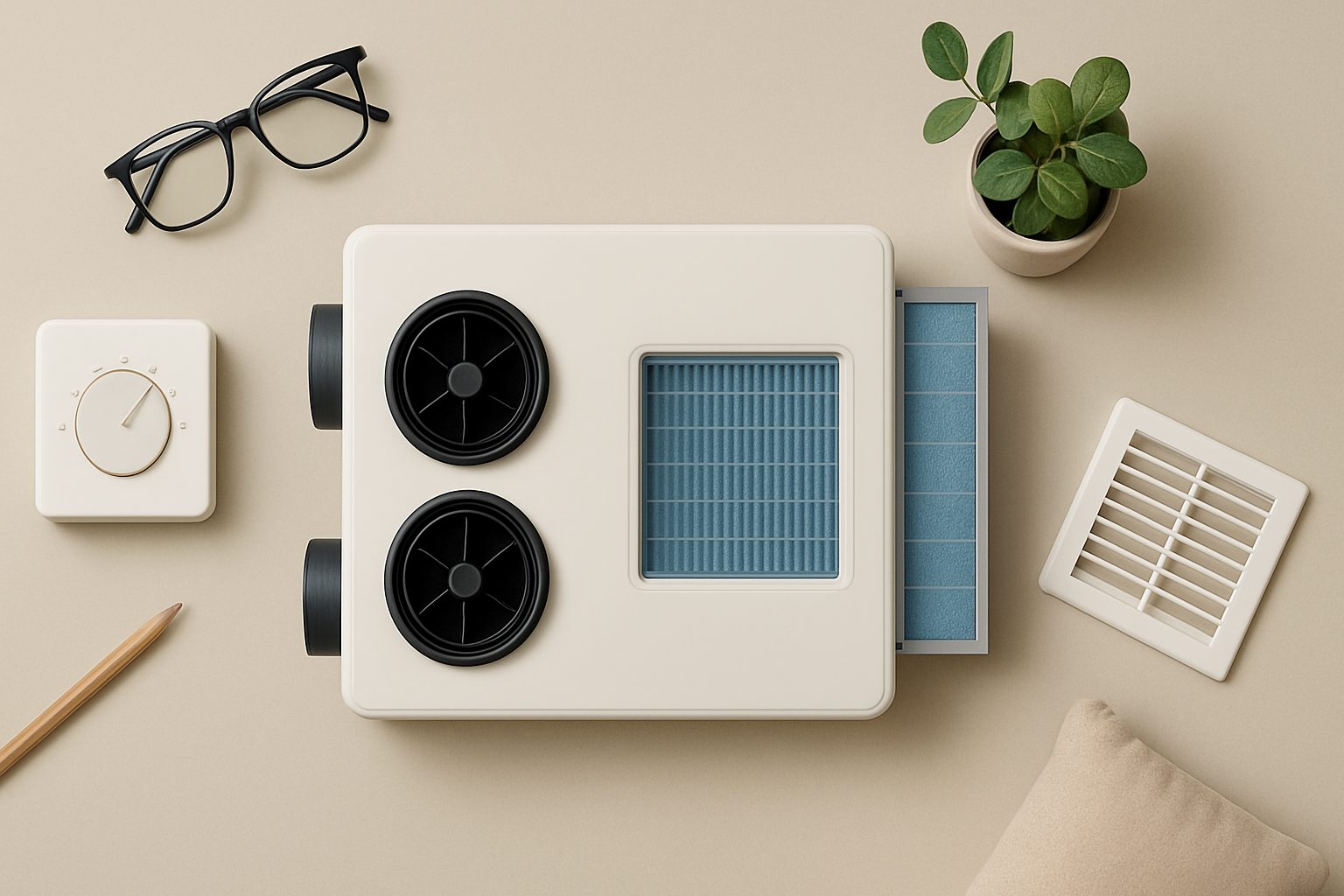
Filters are the first line of defence and often the most-neglected component. Most domestic AHUs use one of two types: disposable flat-panel filters or pleated filters, usually rated MERV 8 to MERV 13.
Check your filter at least once a month. Hold it up to light. If you can't see light through it clearly, it needs replacing. Clogged filters force the fan to work harder, which raises running costs and can eventually damage the motor. In a dusty environment—urban areas, homes near busy roads, or properties with shedding pets—you might need to replace filters every two to three months rather than annually.
When you replace a filter, note the size and MERV rating printed on the frame. Don't guess. A filter that's the wrong size will leave gaps and let dust bypass it entirely.
Inspect and Clean the Coils
Heating and cooling coils sit inside your AHU and are where the actual heat exchange happens. Over time, they collect dust, pet hair, and whatever else your filters missed. Coils mat up with debris, and that blocks airflow and reduces efficiency.
You may be able to see the coils through an access panel or inspection port. If they're visibly dusty or discoloured, they need attention. If you're handy, a soft-bristled brush and a vacuum can help, but be gentle—coil fins are delicate. If there's evidence of mould or if the coils are heavily blocked, it's worth calling a professional. They have compressed air and coil-cleaning equipment that does a proper job without damaging the fins.
Listen for Noise and Check Vibration
AHUs do make noise—the fan has to move air. But a sudden change is worth investigating. If your unit is suddenly louder, has started rattling, or vibrates more than usual, something's amiss. Common culprits include a dusty filter (which we've covered), a bent or damaged fan blade, loose mounting bolts, or debris inside the casing.
Give the unit a visual inspection. Check that all bolts and brackets are tight. Look inside any access panels for loose debris, leaves, or other foreign objects. If you spot damage to the fan or casing, a professional will need to assess whether repair is worthwhile.
Inspect Your Ductwork
Even if your AHU is spotless, leaky or poorly insulated ducts waste energy and can pull in dust and odours. Once a year, check accessible ducts—typically in lofts, basements, or plant rooms. Look for gaps at joints, visible tears, or loose lagging.
Minor gaps can be sealed with mastic or foil tape; larger damage usually needs professional attention. In winter, uninsulated ducts in unheated spaces lose heat fast. Adding duct insulation is a worthwhile investment if you're running your AHU in heating mode.
Check Electrical Connections and Safety Controls
If you're comfortable opening the AHU's electrical panel, take a quick look for obvious problems: discoloured or burnt components, loose wires, or corrosion. Don't probe live connections; this is just a visual scan.
Most AHUs have a low-voltage control system. If your unit has a programmable thermostat or a smart controller, make sure it's responding correctly. If it's not turning on or off when it should, you've got a control problem rather than an equipment problem.
Plan for Professional Servicing
Not everything can be done by eye and a vacuum. Once a year, ideally before the heating season (September or October), book a qualified engineer to give your AHU a full service. They'll check refrigerant levels (if it's a heat pump AHU), test controls, inspect the fan motor, and professionally clean the coils.
A full service typically costs between £150 and £400, depending on the unit's complexity and your engineer's rates. It's not cheap, but it's much less than replacing a unit that's failed early because it was never looked after.
Your Annual Checklist
- Replace or clean the filter (check monthly, replace as needed)
- Visually inspect coils for dust or mould; clean gently if possible
- Check all mounting bolts and brackets are tight
- Listen for changes in noise or vibration
- Inspect accessible ductwork for gaps and damage
- Review thermostat and control settings for correct operation
- Book a professional service before the heating season
A well-maintained AHU will run more quietly, cost less to operate, and last significantly longer. It's one of those jobs where a small, regular effort prevents large, expensive problems down the line.
More options
- Zehnder ComfoAir MVHR Units (Amazon UK)
- Vent-Axia Sentinel Kinetic MVHR (Amazon UK)
- Mitsubishi Lossnay Ventilation Units (Amazon UK)
- Nuaire Drimaster & Positive Input Ventilation (Amazon UK)
- AHU Replacement Filters & Accessories (Amazon UK)